
The practitioner's day
Your diary, the people in it, and the record you leave behind.
Before the first patient
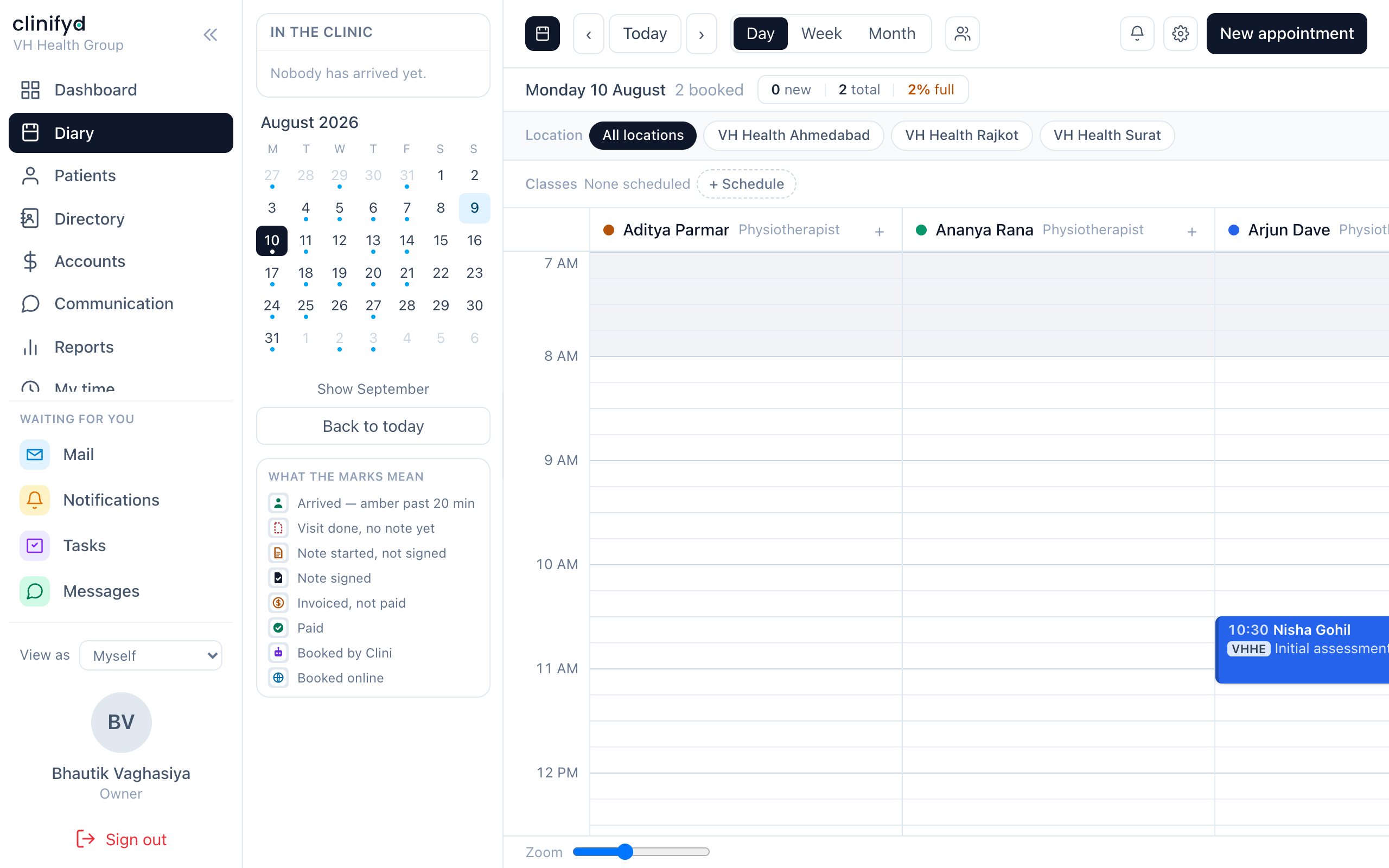
Dashboard, then Diary.
Worth a look on the dashboard: Today's list down the right, and Uncompleted notes — appointments you have seen with nothing written. That card only shows your own; a colleague's outstanding notes are not your business and the software will not show them to you unless you hold Read any clinical note.
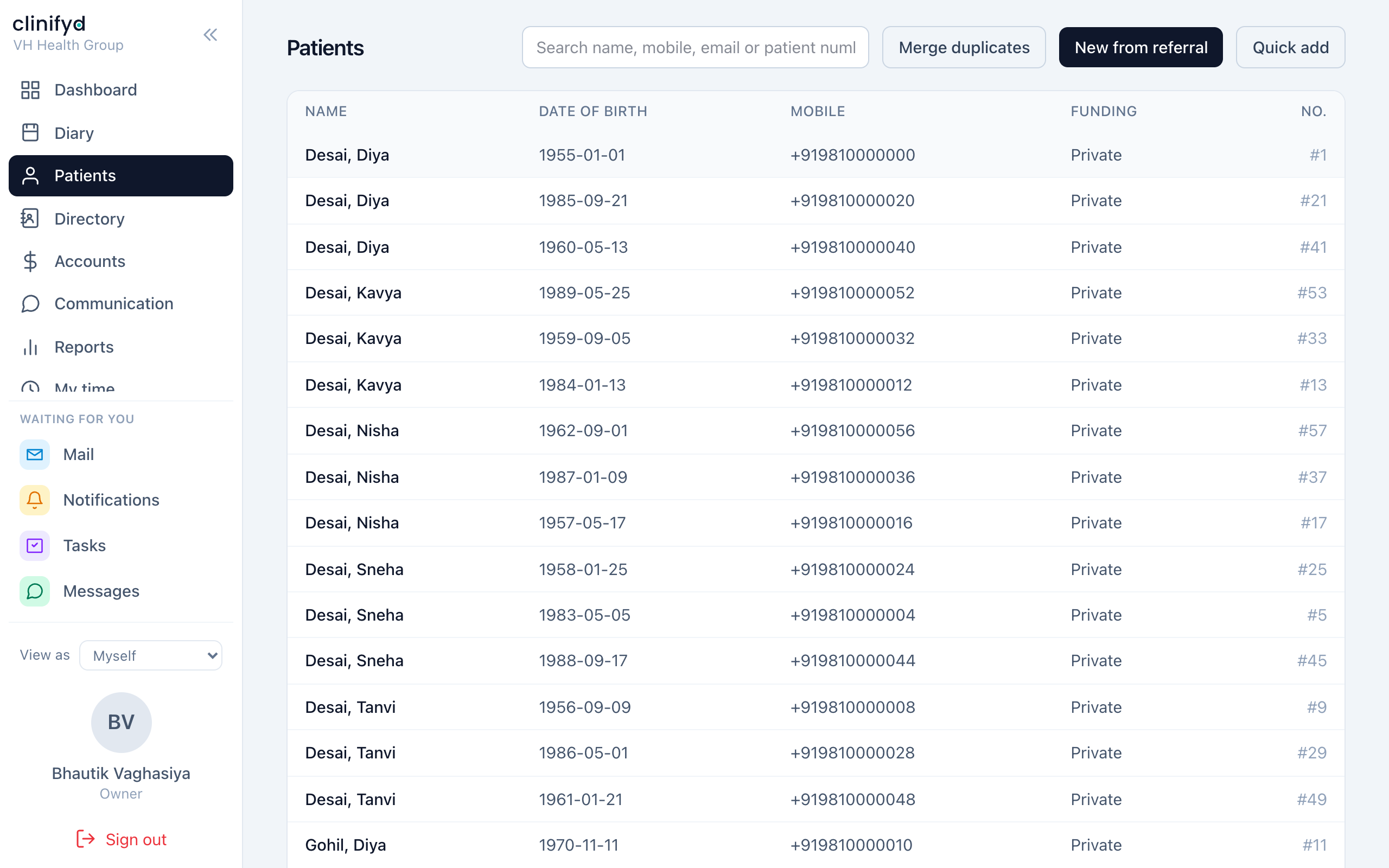
Set your own diary up once, in Profile → Diary: start and end of day, slot size, 12 or 24 hour clock, zoom. It is yours, not the practice's.
Seeing somebody
Click the appointment. Three tabs:
| Tab | What is there |
|---|---|
| Appointment | Time, service, status, who booked it |
| Patient | Their record — history, alerts, funding, past visits |
| Billing | What this visit has been billed, if anything |
Mark them In progress when they come through, and Completed at the end.
Writing the note
From the appointment, or from the person's record.
A note is written against a template. The practice's templates live in Manage → Note templates. A note copies its template's layout at the moment you start writing, so a template edited next month never rewrites what you wrote today.
Draft, then signed
A note is a draft while you are writing it. Drafts can be edited freely.
Signing locks it permanently. After that the text cannot change. If something needs correcting, you add an amendment — a dated addition that sits with the note, leaving the original standing.
This is the same shape as a credit note against an invoice, and for the same reason: the record has to show what was written and when, not merely what somebody currently wishes it said. A note that can be quietly rewritten is worth nothing in a complaint, an insurance dispute or a court.
So: do not sign until you mean it. An unsigned draft is not a problem. An unsigned draft three weeks later is, which is what the Uncompleted notes card is for.
Notes are never deleted
Nothing clinical is ever hard-deleted. A record can be archived — hidden from the active list — and every word is kept.
Cases
A case is one episode of care: a knee, a shoulder, a return-to-work claim. Notes, letters, plans and measures hang off it.
Use them where a person has more than one thing going on. A knee and a shoulder are authorised separately, funded separately and discharged separately, and running them as one story makes all three harder.
Close a case with a discharge summary when the episode ends.
Plans, measures and letters
Plans — a management plan the clinic was sent: an insurer's plan, an NDIS plan, a GP's care plan. The file is kept, along with the few facts that govern treatment: who authorised it, how long it runs, how many sessions it covers. The session counter counts from the referral date, and counts attended visits — a cancellation consumes nothing.
Measures — outcome scores. Record the same one on more than one visit and you have a trend; record it once and you have a number.
Letters — to a GP, a specialist, an insurer. Same lifecycle as a note: draft, then final. A final letter never changes; correcting one means writing another that supersedes it, because the copy the GP holds must stay the copy you hold.
Drafts you have started and not sent show on the dashboard under Unfinished letters, oldest first. A referrer waiting on a reply somebody thinks they sent is the failure this card exists to prevent.
Billing your own work
Depending on how your practice has set permissions, you may raise the invoice yourself or leave it to the front desk.
Either way, the visit needs to end up billed. Not yet invoiced on the dashboard is the safety net — appointments that happened and were never charged for.
Your time
My time is your timesheet and leave. Clock on and off there; leave balances accrue from your employment terms.
Casual and contractor accounts do not accrue leave. That is deliberate and correct — a casual in Australia is paid loading instead, and showing a balance against one would be a number somebody eventually asks to be paid out.
End of day
- Every appointment has an outcome.
- Notes written. Sign the ones you are finished with.
- Anything that needs a letter, started.